Celebrating Texas History and the 250th Birthday of the United States
250 years after the signing of the Declaration of Independence, Texas powers the US economy and holds the hopes and fears of both political parties. But for Texans, it can sometimes seem like the American Revolution happened somewhere else. After all, Washington famously crossed the Delaware, not the Trinity, and the signing of the Declaration of Independence took place over a thousand miles away. Even so, the Revolution happened here, too—and you can find it, if you know where to look, including in the Trinity River.
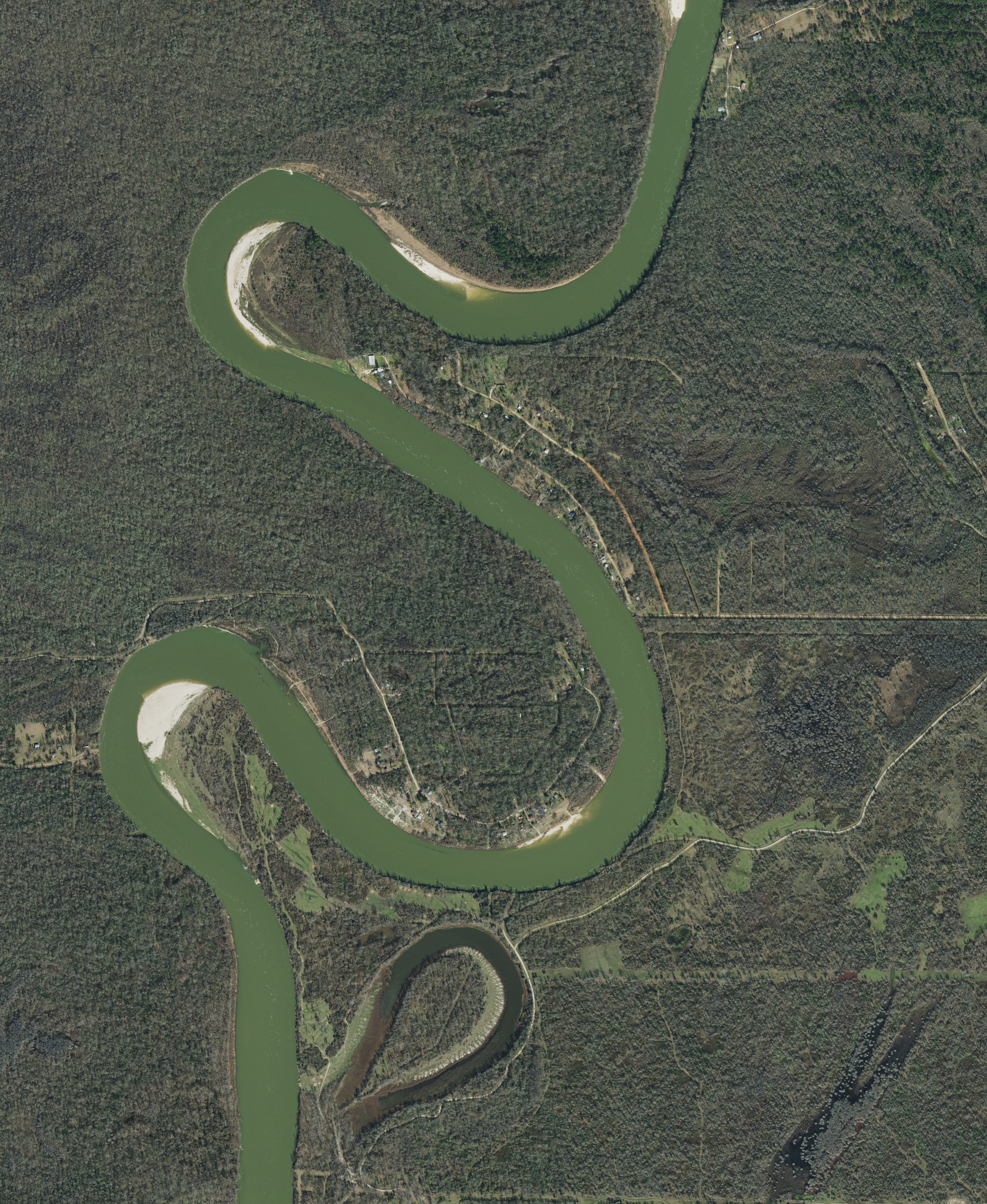
Take, for example, the rusted musket on display at the Blanche K. Werner Public Library in Trinity. Last used in 1779, it comes from Bucareli, a short-lived Spanish settlement on the west bank of the Trinity River. Bucareli was founded only five years earlier, in 1774, and it lived and died with the American Revolution.
Much like it was with the Pilgrims of Plymouth, Bucareli’s settlers relied on the grace of the local Bidai people, who taught the Spanish colonists to plant their crops on the opposite, higher bank to protect them from the Trinity’s regular floods. Still, even with the Bidai’s help, the settlement did not last, and the American Revolution has a lot to do with why. Alongside our nation’s war for independence came what the historian Elizabeth Fenn has called the Pox Americana, a terrible outbreak of smallpox that killed at least 130,000 people across the continent. Initial outbreaks in revolutionary Boston and elsewhere along the eastern seaboard had, by 1778, made it to the Caribbean and then New Orleans. From there, it was only a matter of time before trade routes spread it to Bucareli.
When the outbreak hit, it damaged the settlement, but devastated the Bidai, wiping out half of the tribe. By 1779, following a stronger Trinity flood and Comanche raids, the settlement had been reduced to a charred-out ruin. It was in the desperate retreat from this forsaken site that a soldier may have dropped his musket in the half-flooded Trinity bottomlands, too intent on running away from the river and the Comanche to look back and pick up his gun.
But the story of the war for independence in Texas is not just about plagues and suffering; Spanish Texans supported the American Revolution, too. Spain declared war on Britain in the summer of 1779, forcing the British to fight in the Gulf. In need of cattle to feed his troops, Louisiana Governor Bernardo de Gálvez requested support from the west, and Spanish settlers in Texas answered the call. Ranchers provided thousands of cattle that were driven east starting in 1779. On their way from San Antonio and elsewhere, the drivers may have passed close to the burned-out remains of Bucareli, traveling the same trails in reverse that had just carried smallpox into the region.
If Texans are going to celebrate the United States’ 250th, then we should try to preserve our history from the Revolutionary era. But it won’t be easy. Between eroding rivers and ceaseless development, finding physical connections to Texas’s past can be challenging, and even some of what remains is under threat. Bucareli, for example, is long gone, having been reclaimed by the Trinity’s waters. But one of its people’s legacies is still with us: the Old Stone Fort in Nacogdoches. Refugees from Bucareli did not wait for government approval to cross the Trinity. Instead, they headed east, and settled in Nacogdoches, leading to its development as a trading center, and later, the construction of the Old Fort.
In 1902 the historic building was torn down to make room for a drug store, but concerned citizens rescued the original stones and in the 1930s the fort was reconstructed on the grounds of what is now Stephen F. Austin State University. Once again, this historic building is under threat, as the UT System Board of Regents wants to relocate the Old Fort to make room for a new science center. The Bucareli settlers’ legacy of defiance should be honored, and the site, preserved.
Still, you can find this history in surprising places. More Texans depend on water from the Trinity than any other river in Texas—the same river that flooded Bucareli and rusted the musket now sitting in a library display case. So, as we celebrate the nation's 250th, open your tap and toast to the history in our water.